Setting up a place to train at home sounds simple until you actually try to do it. You move some furniture, look at the space you have, and then realize you are not totally sure what belongs there. Gloves seem obvious. After that, it gets blurry.
Most people are not trying to recreate a boxing gym. They just want a setup that works. Something they can use consistently without overthinking it. That is where choosing the right boxing gear at home starts to matter more than people expect.
This blog gives a clear overview of the boxing gear at home you actually need, with a practical breakdown of the different types of boxing bags, what each one is good for, and how to pick the right option for your space and goals.
Start with the basics of boxing gear at home
Before we even talk about bags, let’s cover the basics. You do not need a full gym setup. Boxing gear at home should be simple and functional.
You need hand wraps. Always. They protect your wrists and knuckles, even if you are just hitting lightly. Gloves come next. For bag work, most people land in the 12 to 16 ounce range, depending on size and comfort. Get gloves made for bags, not sparring, if you can.
That’s the core. Everything else builds around the bag you choose. And that choice matters more than most people think.
Why the bag matters more than the rest
The bag sets the tone for your training. It decides how you move, how hard you hit, and what skills you develop. Different types of boxing bags serve different purposes. Some are about power. Some are about timing. Some are about endurance and flow.
Picking the wrong one does not ruin your training, but it can slow it down or make it less fun. And fun matters if you want to stay consistent.
Let’s walk through the main options.
Heavy bags for power and conditioning
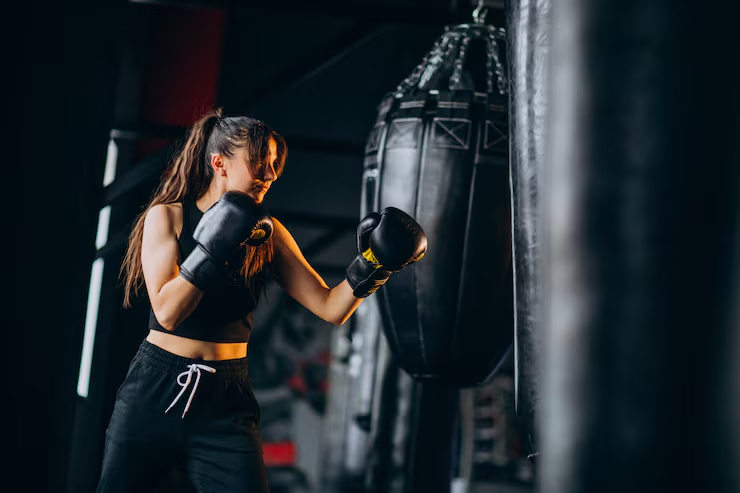
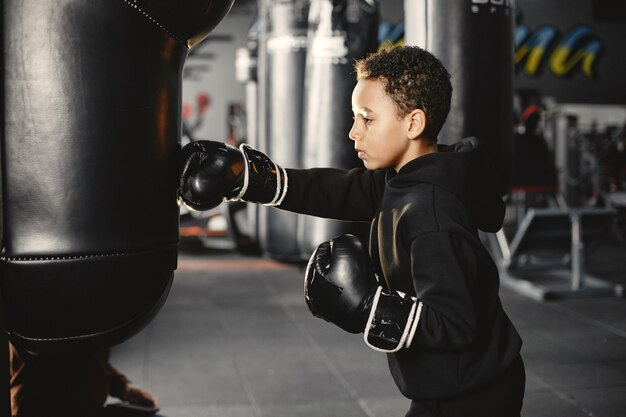
The heavy bag is what most people picture first. Big. Solid. Doesn’t move much. This is the bag for power, basic combos, and full body conditioning.
When you feel like throwing hard punches, practicing form, and burning calories, you can choose a heavy bag as a power option. It is a good workout to gain endurance in the shoulders, and it teaches you to sit down upon your punches.
Heavy bags usually come in lengths from 4 to 6 feet. Shorter bags are fine for upper body work. Longer bags let you mix in body shots and knees if you want that later.
You need a solid mounting option. Ceiling mounts work well if your structure allows it. A heavy bag stand works if you have floor space and want flexibility.
This is often the first bag people buy, and for good reason.
Free-standing bags for flexibility and small spaces
Unless it is possible to drill into the ceiling, a free-standing bag is the solution. They are bags that are filled at the bottom with sand or water, and they balance themselves.
They are portable, simple to install, and can be used in apartments or a garage. They are very suitable when you are starting out and during casual training.
The tradeoff is movement. They tend to slide or tip if you hit hard. That is not always a bad thing. It can force you to focus on control and balance.
For boxing gear at home in tight spaces, free-standing bags are often the most realistic option.
Speed bags for timing and rhythm
Speed bags appear to be scary, but they are not only used by professionals. They assist in speed of hands, coordination, and rhythm. They also teach you to lean your shoulders down and breathe as your hands remain busy.
You do not hit a speed bag hard. You tap it. The value comes from repetition and flow.
Speed bags need a platform and some setup time. They also make noise, which matters if you live close to others.
This is not a must-have, but it is a great add-on once you have a main bag.
Double-end bags for accuracy and movement
The double-end bag is one of the most underrated tools in boxing. It is a small bag attached to the floor and ceiling with elastic cords. It moves fast and snaps back at you if you miss.
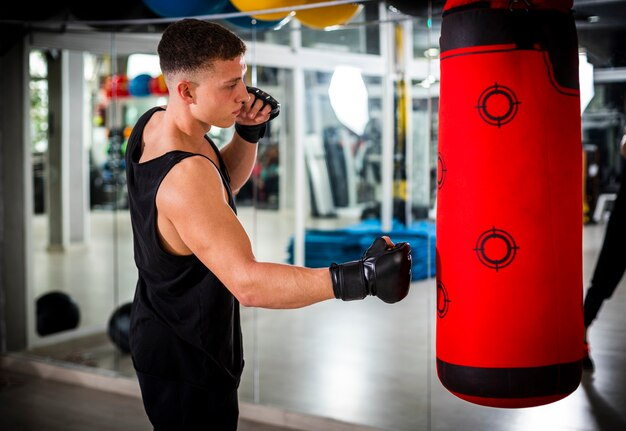
This bag teaches accuracy, timing, and head movement. You cannot just swing wildly on it. You have to pay attention.
If your goal is skill, not just sweat, this bag deserves serious consideration. It takes less space than a heavy bag and adds variety to your training.
Uppercut bags for inside work
Uppercut bags are shaped differently. They are designed to sit closer to your body and let you practice uppercuts and short hooks.
They are not usually a first purchase. They shine once you already have the basics down and want to work on combinations.
If you like variety and plan to stick with training long term, this can be a solid upgrade.
So which bag should you choose?
Be honest about three things. Your space. Your budget. Your goals.
A heavy bag or free-standing bag will perform the same function should you require easy and stress-free exercises that involve hard work. In case you want skill, coordination, and mind, a double-end bag or speed bag will do. When you are in the mood for having it all, begin with one and add later.
There is no perfect setup. The best boxing gear at home is the gear you actually use.
Making it work long term
Once your bag is set up, keep things simple. Short sessions are fine. Ten minutes of focused work beats an hour of sloppy punching.
Wrap your hands. Warm up your shoulders. Listen to your body. Boxing is powerful, but it rewards patience.
That mindset is at the heart of what Be Happy Boxing stands for. Training that feels good, clears your head, and fits real life, not just gym culture.
Final thoughts and next steps
Boxing at home does not need to be complicated. Start with the basics. Choose from the different types of boxing bags based on your space and goals. Build from there.
If you want more honest guidance, simple breakdowns, and real talk about boxing without the ego, Be Happy Boxing has you covered.
Ready to build your home boxing setup the right way?
Explore more tips and guides with Be Happy Boxing
Start Training Smarter
FAQs
What boxing gear do I actually need to train at home?
Hand wraps. Good gloves. One solid bag. That is it. Simple gear that lets you train hard without overthinking.
Which boxing bag works best if I am just starting out?
A heavy bag or free-standing bag. Easy to use, forgiving, and perfect for building basics and confidence.
How much space do I really need for boxing gear at home?
Not much. Enough room to move, breathe, circle the bag, and throw punches without hitting walls.
Does hitting a boxing bag really help with stress and fitness?
Absolutely. Your heart rate climbs fast, stress drops, and you walk away feeling lighter every time.