
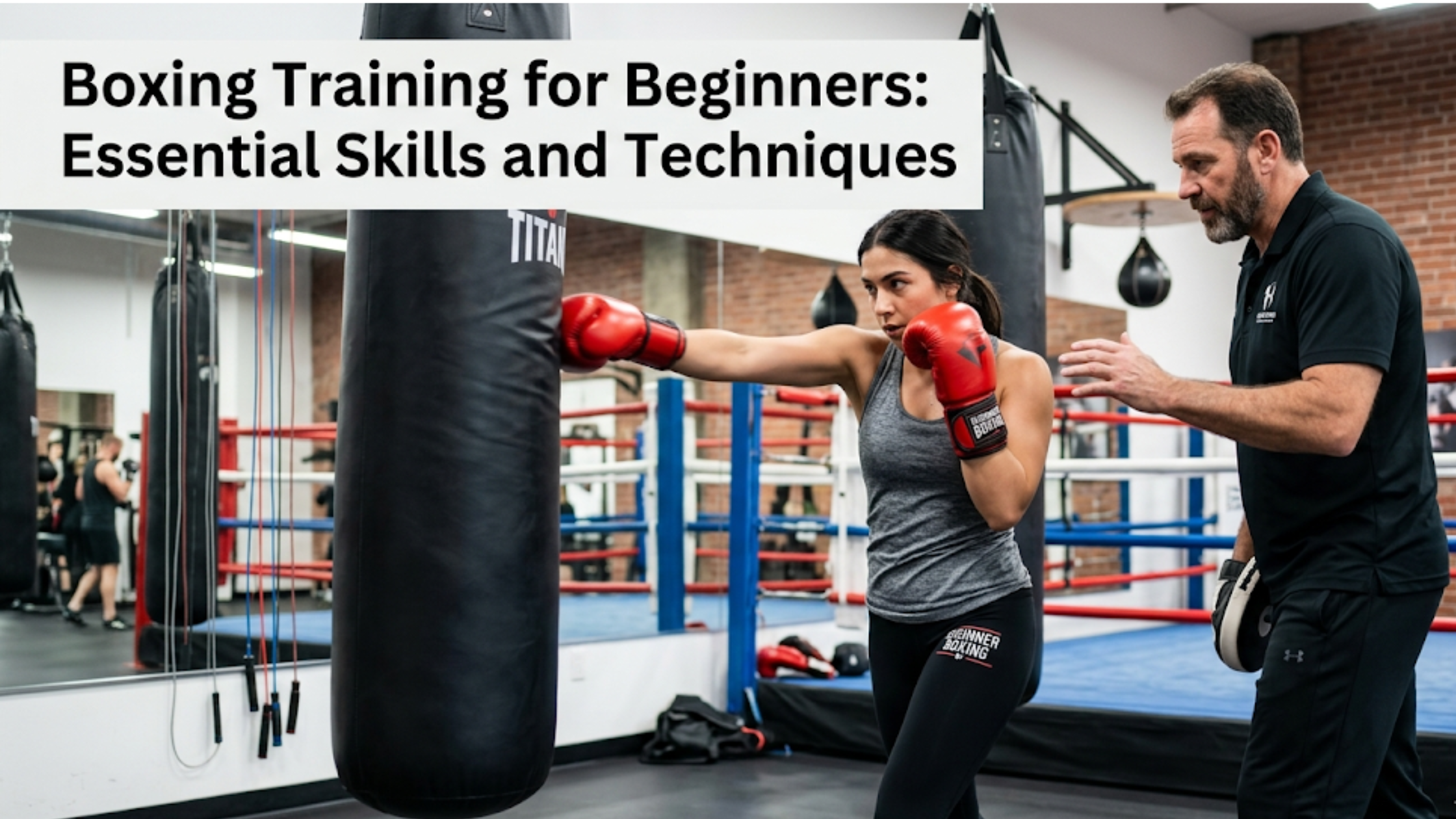
Most people feel completely out of place when they first walk into a boxing gym. Seeing everyone else move fast makes a newcomer want to turn around and walk right back out the door.
That is exactly why this guide on boxing training for beginners exists. There is no point wasting time on complex combinations when a person just needs to learn how to stand and move without falling over.
Forget about looking cool or hitting hard on day one. The absolute priority is getting the hands up and the feet set so the workout actually makes sense.
Mastering Your Stance and Core Boxing Fundamentals
Forget about throwing punches for a second. Bad footwork ruins your power and leaves you completely off balance. Your feet run the whole show.
Right-handed people need the left foot forward and the right foot back. Keep them shoulder-width apart. Turn your torso sideways so you do not give someone an easy target to hit.
Glue your hands to your face. The right glove shields your chin while the left stays out front. If you don’t tuck your elbows inside your ribcage, you’re going to have the wind knocked out of you with one well-placed body shot.
Stay low on your knees and not upright and rigid like a fence post. You look like a bull’s-eye if you’re stiff-legged. Never cross your ankles while walking, or you might as well set yourself up to fall down.
- Left foot forward: Gives you a strong lead jab.
- Hands up always: Protects your jaw from surprise hooks.
- Elbows tucked: Keeps your liver and ribs safe from body shots.
- Weight centered: Helps you shift weight smoothly for power.
The Four Basic Punches You Need to Learn Boxing
Forget about learning dozens of fancy movie moves. You only need four punches to actually compete, but you need to throw them correctly. To learn boxing without looking ridiculous, start with these core shots.
The jab comes from your front hand. It is a straight, fast snap used to measure distance, mess with your opponent’s vision, and set up your actual power shots.

Your cross is the big right hand, or left if you are southpaw. You throw it straight from the back, rotating your entire hip and back foot to dump all your body weight into the knuckle.
Hooks loop around from the side to catch people around their guard. Keep it short, turn your heel, and make sure your opposite hand stays glued to your face so you do not get countered.
Uppercuts come up right through the center. When someone leans in too close or ducks down, you drive this punch straight up using the leverage from your legs.
Ultimate Beginner Boxing Workout Routine
Nobody is putting you in the ring to spar on your first day. A real beginner boxing workout is mostly about surviving the conditioning and getting your heart rate up.
Get yourself a rope and start jumping rope for ten minutes non-stop. Your calves will feel on fire immediately, but that is how you develop the bouncing power needed to last through several rounds.
Next is shadowboxing. Grab a mirror, look at your own form, and fight the air. Work on exhaling with every punch and snapping your hands back to your chin instead of letting them drop.
Finish on the heavy bag, but stop trying to murder it with single, wild swings. Treat the bag like a moving person, circle around it, and throw clean combinations instead of lazy slaps.
- 3 Rounds Skipping Rope: Warms up the calves and shoulders.
- 3 Rounds Shadowboxing: Sharpens your muscle memory and form.
- 3 Rounds Heavy Bag: Builds punching power and wrist conditioning.
- 2 Rounds Core Work: Sit-ups and planks for rotational strength.
Footwork and Critical Boxing Drills for Beginners
Punching is only half the battle. Good footwork keeps you from getting hit and puts you in the perfect position to strike back. Moving smoothly is what separates chaotic brawling from clean boxing.
The basic rule of footwork is simple. Whichever direction you want to go, step with that foot first. Moving left means you step with your left foot. Moving forward means you step with your lead foot first.
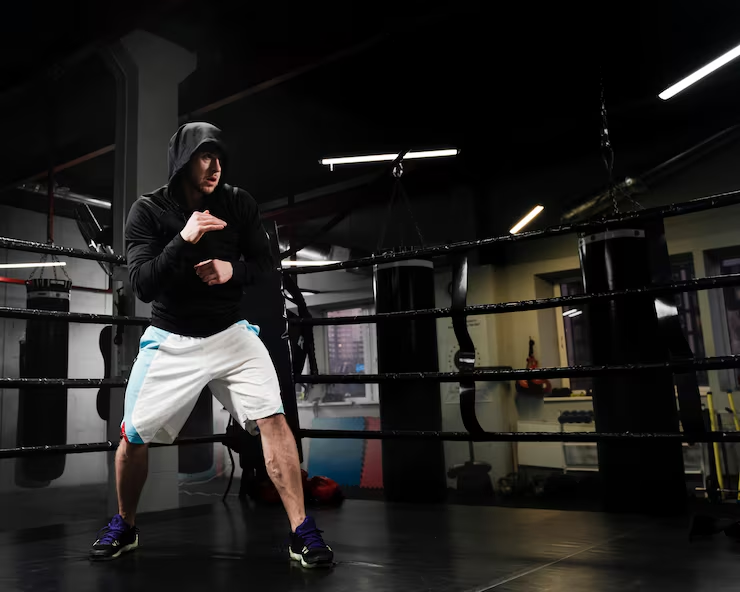
Practice step-and-drag drills across the floor. Take a step, then drag the other foot to return to your perfect stance. Keep your feet wide, so you never end up walking on a tightrope.
These boxing drills for beginners will feel clumsy at first. Your legs might feel heavy, and you will want to look down. Keep your eyes up and focus on small, controlled steps.
Perfecting the Absolute Boxing Basics
Defense keeps you safe while you look for an opening. You cannot just stand there and take hits. Learning how to move your head and block punches is crucial for your survival.
The simplest defense is the catch. Use your rear glove like a catcher’s mitt to stop an incoming jab. Just tap the punch away slightly without pulling your hand too far from your face.
Slipping involves moving your head just outside the path of a straight punch. Roll your shoulders and tilt slightly to the side, letting the punch slide right past your ear.
- Catching: Stops straight shots with minimal movement.
- Slipping: Leaves both your hands free to counterpunch immediately.
- Rolling: Ducking under hooks to escape to the side.
- High Guard: Bringing both gloves tight to absorb heavy pressure.
Gear Essentials for Your New Journey
You cannot train safely without the proper equipment. Protecting your hands and brain should always be your number one priority when stepping into any combat sport.
Hand wraps are non-negotiable. They protect the tiny bones in your hands and support your wrists. Never hit a heavy bag without wrapping up properly, or you will hurt yourself.
Get yourself a decent pair of 16-ounce boxing gloves. They offer enough padding to protect your knuckles and your training partners. Cheap, thin gloves will only lead to sore wrists.
- 180-inch Hand Wraps: Essential wrist and knuckle protection.
- 16oz Training Gloves: The standard size for safe bag work.
- Boil-and-Bite Mouthguard: Protects your teeth and prevents jaw fractures.
- Athletic Shoes: Flat soles help you grip the floor better.
Join the Be Happy Boxing Community
It can be pretty scary to step into a boxing gym for the first time. However, there is no need to worry because everything that goes down here isn’t something you will have to figure out by yourself. You see, in our boxing community, we see boxing as much more than hitting something.
We’re here to give you the actual, straight-up advice you need when you’re just starting out. No elitist gym attitudes or gatekeeping allowed. Whether you just need an honest review on gloves or a simple breakdown of how to throw a proper jab, we’ve got you covered.
Conclusion
Expect to look sloppy for a while and deal with some seriously aching shoulders. That is just the tax for learning a new sport, so nobody should trip when they mess up a basic footwork drill.
The trick is just showing up to do the boring repetitions until the hands move without any second-guessing. Speed and power do not mean a thing if the basic form is completely broken anyway.
Frequently Asked Questions
What gear do I need for a Be Happy Boxing training for beginners program?
To start out with Be Happy Boxing, you just need two things. Get a pair of 180-inch hand wraps for your wrists and some 16-oz training gloves. Do not worry about a mouthguard unless you are actively drilling with a partner.
How often should a beginner train in boxing?
Two or three times a week is plenty when you are starting out. Your knuckles, shoulders, and wrists need time to get used to hitting things. If you try to train every day, you will just end up hurt and exhausted.
Can I learn the sport of boxing by training at home?
You can learn the basic movements and build your cardio at home using a mirror. But eventually, you need a real gym. You cannot get proper feedback on your mistakes from a video screen, and you need eyes on your form.
Will boxing training help me lose weight quickly?
Yes, because it is intense conditioning that uses your entire body. You are constantly moving, twisting, and throwing power, which burns way more energy than running on a treadmill. It strips fat fast if your diet isn’t garbage.
How long does it take to learn the basic punches?
You can learn the basic mechanics of the main punches in a few days. But making them second nature takes months of hitting bags. Getting the timing right and keeping your hands up under pressure is something you work on forever.