

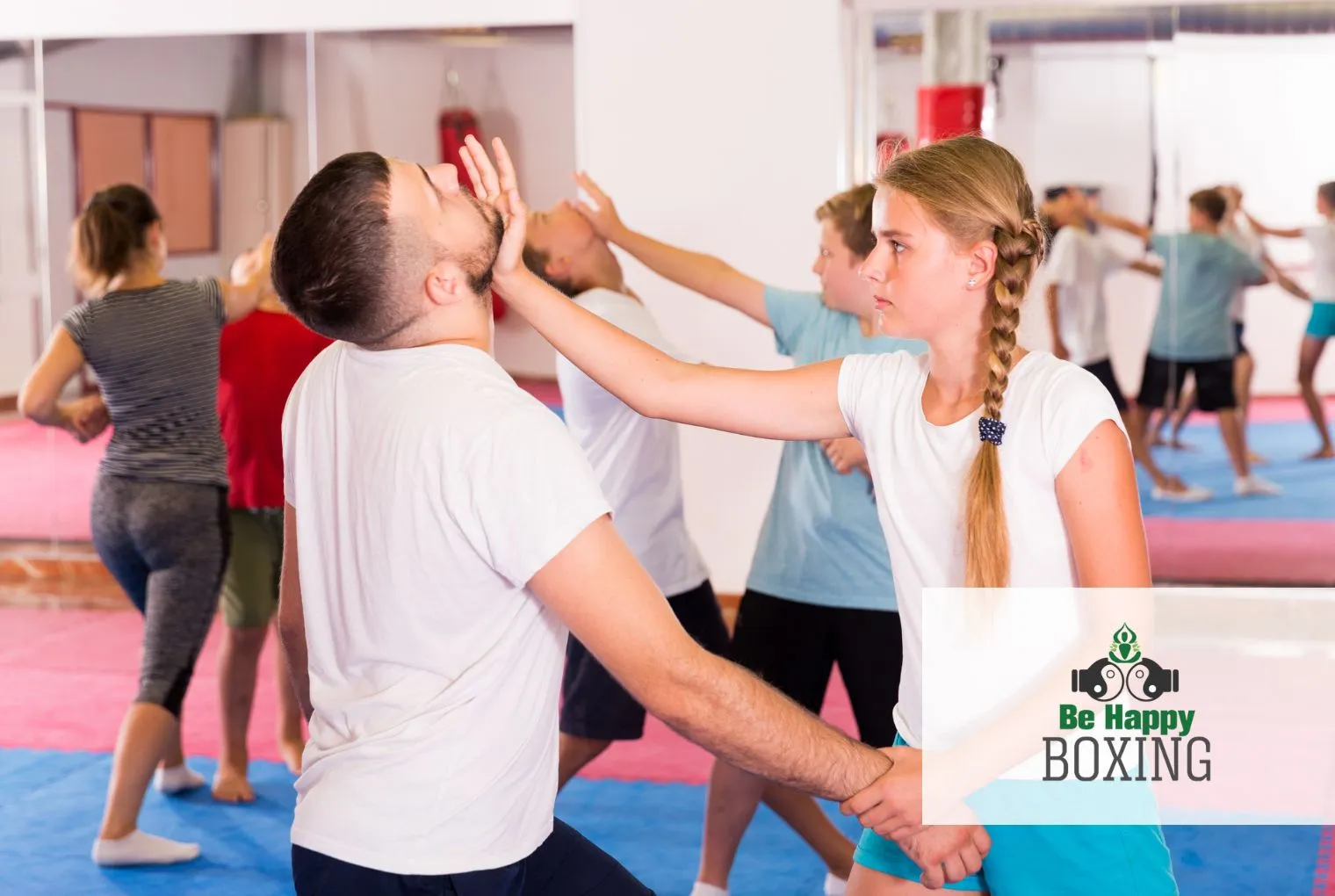
When most people think of boxing, they imagine a boxing match between two fighters in a ring, trading blows for a title. But outside of the spotlight and the ring, boxing for self-defense is gaining serious attention in self-defense circles—and for good reason.
As one of the most respected combat sports, boxing stands out for its practical application in real-world self-defense scenarios. Learning to box not only teaches you how to throw punches but also develops power, speed, and defensive skills that are crucial for handling real-life confrontations.
Whether you’re an average person looking to protect yourself in a real-life situation or someone already dabbling in martial arts, boxing offers essential skills that are street–effective, practical, and powerful.
Key Takeaways
Boxing is Practical and Street-Effective: Unlike many other martial arts, boxing focuses on delivering fast, accurate strikes and defensive movement that are highly applicable in real-life self-defense situations. Most boxers develop knockout power, speed, and strong defensive skills, making them especially effective in self-defense scenarios.
Mental Toughness and Conditioning Are Core Benefits: Beyond physical skills, boxing develops discipline, awareness, and the ability to remain calm under pressure—traits essential for handling unexpected confrontations.
It’s Ideal for Beginners and Adaptable to Other Styles: Whether you’re new to martial arts or already practicing others like jiu jitsu or krav maga, boxing complements a wide range of disciplines and is accessible for people at any fitness level.
Why Boxing is a Prime Example of Street-Effective Combat
Boxing techniques are not just about offense—they’re about survival. In most self-defense situations, fights happen in close-quarters combat and last only a few seconds.
There’s no referee, no gloves, and no rules. That’s where real boxing shines. Its emphasis on accurate punches, head movement, good footwork, and counterattacks makes it extremely effective in street fights.
The power, speed, and defensive skills displayed in boxing matches demonstrate how these abilities can be crucial in self-defense situations.
Unlike many other martial arts that rely on flashy moves or many kicks, boxing focuses on delivering powerful straight punches with a closed fist that can neutralize an untrained person, or even multiple attackers, quickly. The goal isn’t to impress; it’s to survive.
Boxing vs. Other Martial Arts: What Makes It Different?
When it comes to self-defense purposes, people often compare boxing with other martial arts like Muay Thai, Krav Maga, kung fu, or Brazilian Jiu Jitsu. Each has its strengths:
Muay Thai incorporates elbows, knees, and many kicks—great for offensive diversity.
Brazilian Jiu Jitsu and other grappling arts excel on the ground but can be extremely difficult in multiple opponent scenarios.
Krav Maga is designed for street self-defense but often lacks the depth of technical aspects found in boxing.
Kung Fu may look impressive, but it can give a false sense of security if not trained realistically.
MMA (Mixed Martial Arts) combines striking, grappling, clinching, and leg kicks, offering a more complete approach to self-defense than boxing alone. Wrestling, as a core part of MMA, is especially important for controlling opponents in close quarters or on the ground.
To address the limitations of boxing, learning another martial art such as wrestling or MMA can help you become a more well-rounded fighter and better prepared for various self-defense scenarios.
Boxing, on the other hand, emphasizes physical skills like timing, distance management, and mental toughness. These are crucial in a street altercation where one good hit can decide the outcome. Bruce Lee himself often praised the efficiency of boxing punches and good footwork in real-world combat.

What Boxing Teaches You for Self-Defense
Timing & Distance – The ability to close the gap or maintain range is vital in a real fight.
Head Movement – Slipping, ducking, and rolling keep you from getting hit—key in self-defense situations.
Accurate, Fast Strikes – A well-timed straight punch from a trained boxer can stop one attacker or intimidate multiple opponents.
Mental Toughness – Practicing boxing teaches you how to stay calm under pressure and think clearly.
Conditioning – Boxing training boosts your physical fitness, endurance, and reflexes.
In most self-defense scenarios, you want to avoid going to the ground, especially if there is more than one guy involved. Staying on your feet reduces the risk of being attacked by multiple people or encountering weapons.
All these elements come together in what fans call the sweet science—a calculated, technical sport that becomes a highly efficient combat sport when adapted for self-defense.
Common Misconceptions About Boxing for Self-Defense
There are plenty of myths floating around about boxing for self-defense, and it’s time to set the record straight. One of the biggest misconceptions is that boxing is all about punching and nothing else.
In reality, boxing training covers a wide range of defensive techniques, including head movement, blocking, and footwork—skills that are crucial in self-defense situations.
Another common belief is that boxing isn’t effective for self-defense because it doesn’t include grappling or ground fighting like some other martial arts. While it’s true that boxing focuses on stand-up fighting, its techniques can be adapted and combined with other martial arts, such as Muay Thai or Krav Maga, to create a well-rounded self-defense system.
The ability to move, evade, and deliver powerful, accurate punches often gives boxers a significant advantage in street altercations.
Final Thoughts: Boxing Is Built for Reality
In a world where danger can be unpredictable, boxing for self-defense gives the average person a real chance in a real-life situation. It doesn’t rely on gimmicks or fantasy—it’s built on grit, repetition, and practical defensive techniques. Whether used alone or alongside mixed martial arts, jiu jitsu, or other styles, boxing remains one of the most street-effective tools in your arsenal.
So if you’re ready to hit hard, move smart, and protect yourself, it might be time to learn boxing—not for the ring, but for the world outside it.
Frequently Asked Questions
Can I effectively use boxing for self-defense without ever competing in the ring?
Absolutely. While competitive boxing helps refine timing and pressure control, many people train purely for fitness and self-defense. Street defense scenarios differ greatly from ring fights, and even non-competitive training can prepare you for real-world encounters.
How often should I train boxing if my goal is self-defense?
For self-defense purposes, training 2–3 times a week is a good starting point. Consistency is key. Focus on technique, pad work, and light sparring to develop muscle memory and improve your response time under stress.
Is boxing suitable for smaller or physically weaker individuals?
Yes. Boxing teaches timing, angles, and precision over brute strength. A smaller person who is well-trained in movement and targeting can often outmaneuver a stronger, untrained attacker.