
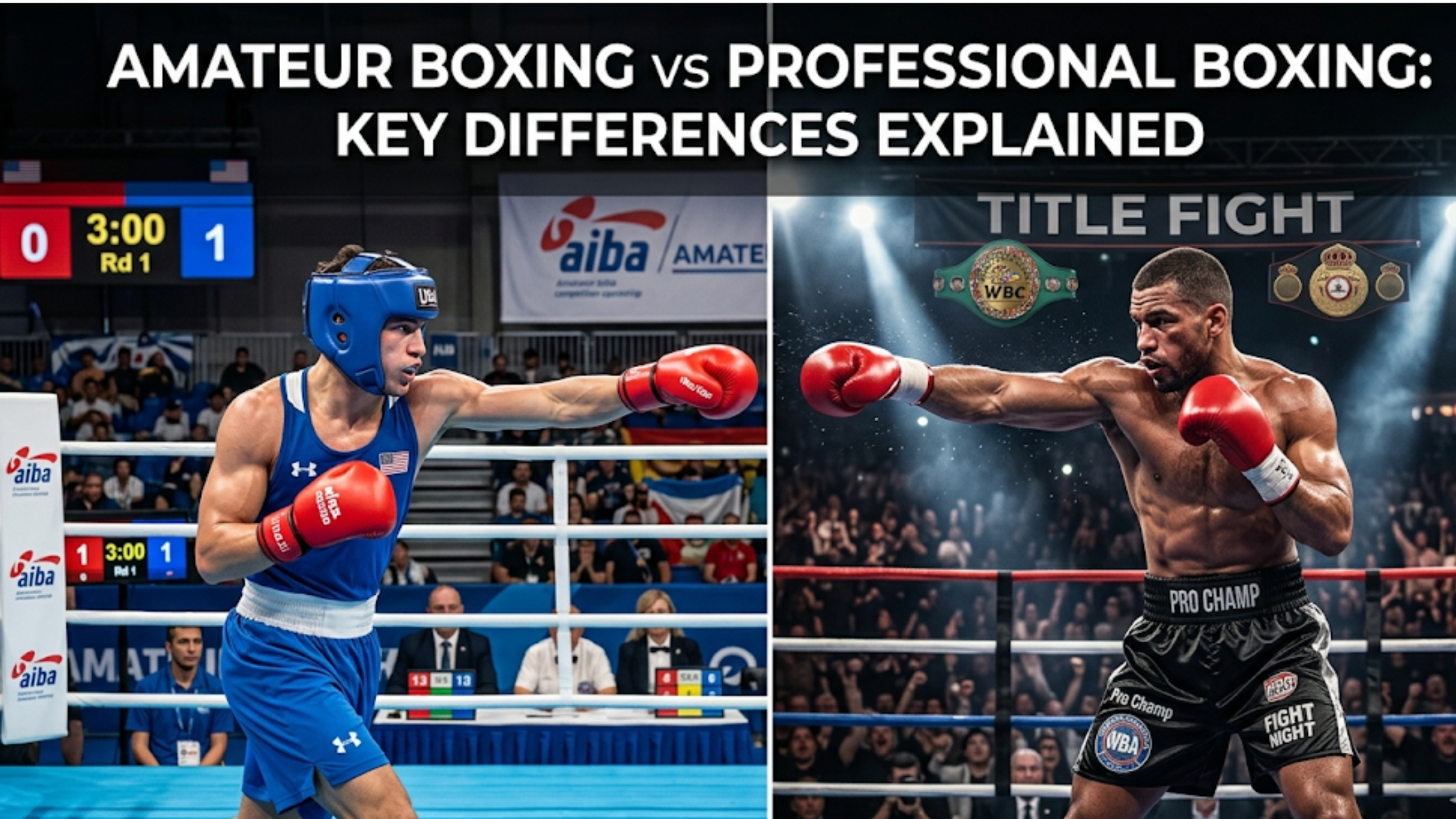
The money is the obvious difference, but thinking that is the only split misses the point entirely. Professional Boxing and the amateur circuit are practically two different sports.
Line up a short amateur bout next to a long pro fight, and you will see it immediately. The speed, the defense, and how guys handle their breathing under pressure look nothing alike. Same ring, but the comparison ends right there.
If you have ever wondered why an Olympic gold medalist can get knocked out in their fifth pro fight, or why a gritty pro would get completely out-pointed in the amateurs, here is how the two worlds actually split.
What Is Amateur Boxing?
Amateur boxing is where you actually learn the trade, working through various boxing competition levels to get your foundational rounds in and build muscle memory. It is all about figuring out how to handle different styles.
Forget the word “amateur” suggesting hobbyists trading lazy jabs. These guys train twice a day, cut weight, and sacrifice any resemblance to a normal life.
They grind through local tournaments just to get a shot at nationals or the Olympics. Nobody cares about selling tickets or protecting records here. It is strictly about staying active and winning the bracket.
What Is Professional Boxing?
Professional boxing is where the sport transforms into a brutal business. The moment a fighter discards the vest and signs a pro contract, the landscape shifts.

Suddenly, every single fight is a high-stakes gamble where records and rankings matter. A bad night does not just mean a plastic trophy slips through your fingers. It means your ranking plummets, your market value drops, and your next paycheck shrinks.
Pros are not there to build experience; they are fighting to advance their careers and make a living. The stakes are higher, and that reality changes the entire energy of the arena.
Amateur Boxing vs Professional Boxing: Quick Comparison
| Category | Amateur Boxing | Professional Boxing |
| Primary Goal | Scoring points and building skill | Winning the fight and earning a living |
| Round Length | Usually 3 rounds (fast and furious) | Anywhere from 4 to 12 rounds |
| Scoring Focus | Clean, landed punches (volume) | Damage, ring generalship, effective aggression |
| Protective Gear | Shorthand competition gloves, sometimes headgear | Smaller, less padded gloves; no headgear |
| Competition Path | Brackets and multi-day tournaments | Single-fight promotions and sanctioning bodies |
| Payment | Unpaid (pride, medals, stipends) | Paid purses and sponsorship cuts |
| Olympic Eligibility | The traditional pinnacle of the sport | Rarely crosses over |
Differences in Fight Structure
This is the most obvious shift for anyone watching from the stands.
Amateur fights are a sprint. Three rounds fly by in a flash. If you spend the first ninety seconds trying to feel out your opponent, you have already thrown away a massive chunk of the fight. There is simply no time to be patient.
Professional boxing is a marathon. A pro fighter has the luxury of time. They can spend the first two rounds downloading data, eating a few jabs just to check an opponent’s speed, and looking for structural flaws. If a pro looks patient early on, they are not being lazy. They are setting a trap for round eight. That is why pro fights feel heavier and more calculated. You have the time to break a human being down piece by piece.
Understanding Amateur Boxing Rules
The rulebook for amateurs is built around one concept: clean, visible scoring.
Judges are looking for the exact moment the leather hits the target. Speed, high work rate, and rapid combinations dominate the scoring cards. Because the clock is ticking loudly from the opening bell, activity is king.
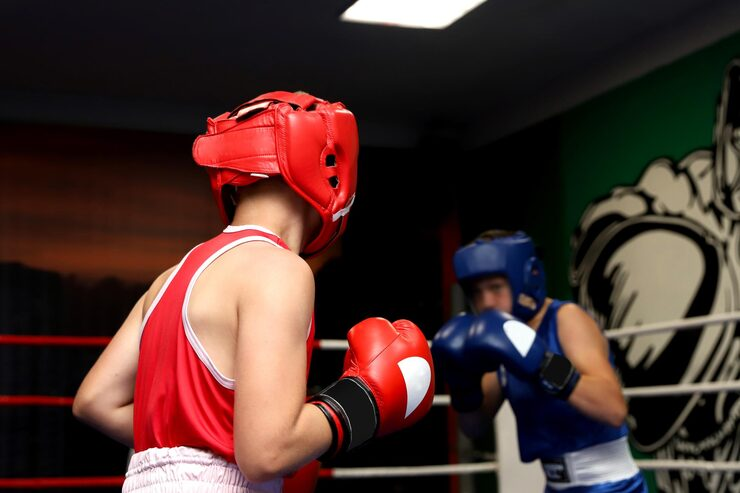
You cannot afford a slow start. If you get caught cold in the first round of an amateur bout, you are almost forced to fight at a reckless, breakneck pace just to even the score before the final bell. It is constant, breathless urgency.
Understanding Pro Boxing Rules
Professional rules reward a much meaner skill set.
Clean punches still matter, but judges weigh them against damage, effective aggression, and who is controlling the center of the canvas. The longer format completely shifts how rules dictate strategy.
A thudding left hook to the liver might not score you huge aesthetic points in round two, but by round nine, that investment pays off when your opponent can barely lift their hands. Smart pros do not throw every punch to score a quick point. They throw punches to weaken the foundation. It is a completely different mindset.
The Difference in Fighting Style
The comparison between an amateur fighter and a trained professional could not be more contrasting.
Amateurs move constantly. You will see lightning-fast footwork, rapid-fire three and four-punch combinations, and lots of bouncing. They need to catch the judge’s eye immediately.
Pros settle into their stances. They plant their feet to get maximum leverage behind their shots. Instead of attempting to come out on top in every bout, they may take a beating in a round in order to learn the rhythm needed to deliver a knock-out blow in the future. They are just tools built for entirely different environments.
Training Approaches Are Different Too
The way you train depends entirely on the chaos you are preparing for.
Amateur fighters train specifically for tournament chaos. You might have to weigh in and fight three separate guys in four days without ever seeing tape on a single one of them. Your cardio has to be off the charts for that, and you have to figure out your opponent’s style within the first thirty seconds of the opening bell, or you are going home empty-handed.
Professional training camps are hyper-focused operations built around a single target. A coach will spend eight weeks analyzing tape of one specific opponent, identifying their defensive ticks, and building a custom blueprint to destroy them.
The preparation is surgical, right down to the gear. Guys will spend years obsessing over the Best Boxing Gloves for sparring or the exact sole grip on their shoes. When you are fighting for 36 minutes instead of 9, the tiniest bit of discomfort can completely break your focus.
Which Path Is Better?
There is no right or wrong approach, and those who say there is have clearly never done enough training in the gym.
Some diehards relish the technical skills, fast action, and international competitions that characterize amateur boxing. It is boxing in its cleanest form. Others are drawn to the theater, the raw drama, and the life-changing money of the professional ranks.
Both paths demand everything you have. Both paths will break you if you cut corners in camp. The right choice depends entirely on what you want out of the hurt business.

Final Thoughts
The split between amateur and pro boxing is not just about fame or a paycheck. You are looking at two completely different sports that happen to share the same ring. One rewards blazing speed and immediate output, while the other is all about patience and breaking a guy down over time.
Neither road is easy, and both will break you if you cut corners in the gym. The only real constant is the massive amount of grunt work it takes to survive either environment.
If you want to figure out which pace fits your style, check out Be Happy Boxing for real, practical training insights to get you started.
Explore More Boxing Tips & Training Guides
FAQ
What is the main difference between amateur and professional boxing?
It is all about the clock and how you win rounds. Amateurs only have three rounds, so they fight at a frantic pace to land as many clean shots as possible before time runs out. Professional Boxing is a much longer grind where judges look at power, who is controlling the ring, and who is actually inflicting the most damage.
Do amateur boxers get paid?
No, they do not get a purse. When you look at amateur vs pro fighters, the most obvious difference is that amateurs are fighting for pride and medals, not money. You might see a top-tier amateur get some grant money or a basic training stipend to help keep the lights on, but they are not getting a check based on ticket sales.
How many rounds are in amateur vs professional boxing?
Amateur matches are almost universally three rounds long. Professional fights start at four rounds for prospects just entering the ranks and scale up to ten or twelve rounds for championship matches.
Can an amateur boxer become a professional boxer?
Absolutely, it is the traditional pipeline. Most elite pros spent years fighting in the amateurs to build their foundation. However, making the jump requires a massive adjustment in training, pacing, and defensive awareness because pro gloves hurt a lot more than amateur ones.
Which type of boxing is safer?
No one plays boxing, and both carry real risks. That said, amateur boxing is generally considered safer because the shorter duration limits the total amount of sustained punishment a fighter takes, and referees are much quicker to step in and stop a one-sided bout.